
-
-
Core manufacturer数字Our AdvantageApplicationOur honor certificate
-
Case classification
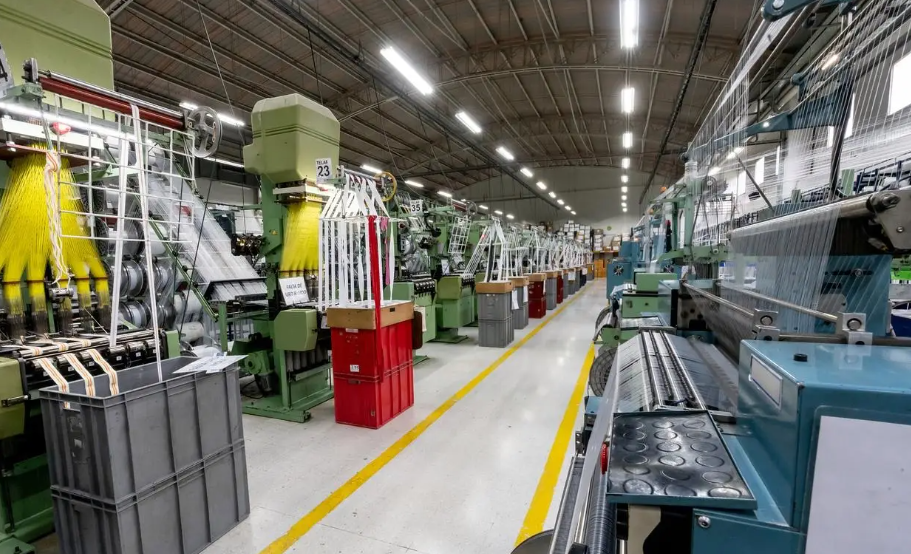
The FGI FD500 frequency converter was used to control the vacuum pump in the plastic packaging factory. Due to the adoption of FGI frequency conversion technology, the vacuum pump was renovated. The well-known Danish plastic packaging film production factory, FAERCH Plastic Packaging Factory, has achieved considerable benefits in terms of energy saving and reducing equipment maintenance costs. FAERCH Plastic Packaging Factory is a renowned manufacturer in the food packaging industry, specializing in producing plastic films and thermoforming them into any shape for use in food industry and retail product packaging. The factory attaches great importance to energy conservation and environmental protection and continuously strives to reduce energy consumption in production.
 1.Energy consumption has been significantly reduced.
One of the key points for energy conservation in the FAERCH plastic packaging plant is the vacuum pump system used for the transmission of plastic particles. The company decided to replace the previous 38 scattered vacuum pumps with a vacuum pump system equipped with three BUSCH & CO. vacuum pumps. Two of the vacuum pumps are controlled by 22kW three-phase motors, one by an FGI FD500 inverter, reducing the original power supply to the vacuum pumps from 285kW to 66kW, and the average energy consumption from 95kW to 35kW. The plant operates 24 hours a day, for 361 days a year, with the maximum working capacity of the vacuum pumps being approximately 150,000 kg/h of plastic particles. Sometimes, it may need to increase to 20,000 kg/h of plastic particles. According to historical data, each cubic meter of gas can transport 8-10 kg of plastic particles, so two vacuum pumps are insufficient to meet the processing capacity of 16,000-20,000 kg/h. Each vacuum-driven pump can deliver 1002m3/h of gas at a pressure of 400MBR, while the pump driven by the FGI FD500 inverter has a slightly lower pressure of about 350MBR. The motor operates at 50Hz, 2940r/min, and the pump speed is slightly lower, about 2780r/min. Reducing energy consumption and controlling the motor speed have enabled the plant to save 23,500 euros in electricity costs annually. Moreover, the installation of filters in the vacuum pump system has also achieved considerable energy-saving effects. The energy consumption per unit of product production has also been reduced to 80% of the original (in 1996). The energy-saving effect is very obvious, and the total equipment renovation investment of 161,000 euros is expected to be recovered within three years.
2.The interactive application reduces maintenance costs.
The pumps of the vacuum pumping station are put into use interactively. The pumps are activated based on the amount of gas. The first to be activated is the pump controlled by the FGI FD500 frequency converter. When its operating frequency exceeds 56Hz or remains above 56Hz for more than 15 seconds, the second pump is directly started by the mains power, while the frequency-controlled pump reduces its speed to adapt to the gas consumption. The third pump is in standby mode. The frequency converter pumps operate within the range of 0 to 58Hz. The flow regulation of the pump system is basically linear. By changing the speed and startup sequence of the frequency converter, the loads and wear on the three pumps can be consistent, eliminating unnecessary mechanical loads, thus reducing the equipment maintenance costs. The use of the interactive method can also save energy over the long term. Although the FGI FD500 frequency converter is very durable, the local agent also provided spare parts for them. The use of frequency conversion technology also reduces environmental temperature and noise.
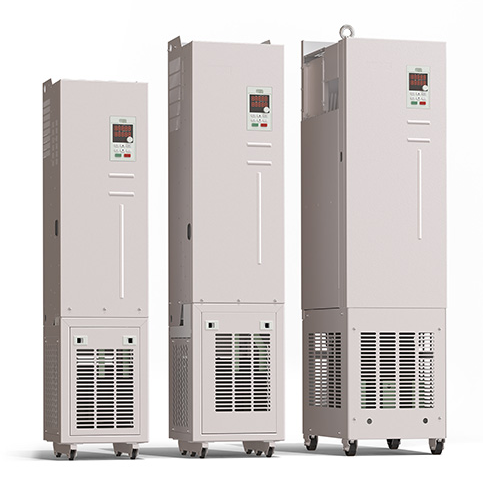
Pumps and fans use macros as standard configuration, just like all other FGI FD500 frequency converters. They are equipped with a 5-in-1 application macro software package, which includes pump and fan application macros. This application macro can be used to drive one variable-frequency pump and up to four auxiliary pumps. The motor is connected to the frequency converter, and the startup sequence of the auxiliary pumps can be changed through the automatic switching function of the software and the peripheral relay system. The frequency converter speed controller is internally equipped with a PI controller, which controls the speed of the variable-frequency pump and outputs start and stop signals to the auxiliary pumps. The application macro has two control sources, Source A is for pump and fan control, and Source B is for direct frequency reference. The control source can be selected through DIB6. All outputs are freely programmable. Additionally, the 8th group of parameters provides multi-pump control functions, such as when the required gas pressure decreases, the frequency converter speed controller will reduce the output of the pump. The FAERCH plastic packaging plant has all production line mechanical equipment controlled by the upper system. The FD500 frequency converter speed controller is connected to it via Profibus, so the status of the pumps can be monitored and controlled by the upper computer. Installing FCDRIVE software on the computer allows for free settings of the frequency converter speed controller.
3.Conclusion
The FGI FD500 frequency converter has been widely applied in the printing and packaging industry. Its wide application has provided conditions and technical means for its convenient use.
Please fill out the form below to request a quote or to request more information about us. please be as detailed as possible in your message, and we will get back to you as soon as possible with a response. we're ready to start working on your new project
Tel: +86 5374922168
Add: FGI Industrial Park, Jincheng Road Middle, Wenshang, Jining City, China
Get the latest updates as soon as possible



Copyright 2025 Fgi Science And Technology Co., Ltd. All Rights Reserved. 123456
